
Every Southern Thanksgiving table has a skillet of cornbread on it somewhere, and at our house it pulls double duty: half of it gets eaten warm with butter and honey the minute it comes out of the oven, and the other half gets crumbled up for the dressing. The secret isn’t really a secret. You heat a cast-iron skillet in a hot oven, melt butter in it until it foams, and pour the batter in so it sizzles the second it hits the pan. That sizzle is what gives you the crisp, golden, almost fried edges that make skillet cornbread worth the trouble.
This version uses buttermilk for tang and tenderness, mostly cornmeal with a little flour so it holds together, and just a spoonful of sugar that you can leave out if your family is in the no-sugar camp. It takes about 10 minutes to mix and 20 to 25 minutes to bake.
Makes one 10-inch skillet (8 wedges) · Prep about 10 min · Bake 20 to 25 min at 425°F (220°C) · Total about 40 min
Ingredients
Weights are given for everything we can weigh, because that’s how we cook at our house.
- 6 tablespoons (85 g) unsalted butter, divided (4 tablespoons melted for the batter, 2 tablespoons for the skillet)
- 1½ cups (210 g) yellow cornmeal, fine or medium grind
- ½ cup (65 g) all-purpose flour
- 1 tablespoon (12 g) granulated sugar (optional, leave it out for stuffing)
- 2 teaspoons baking powder
- ½ teaspoon baking soda
- 1 teaspoon fine salt (about 6 g), or 1½ teaspoons Diamond Crystal kosher salt
- 2 cups (480 ml) buttermilk, ideally at room temperature
- 2 large eggs, at room temperature
For serving: soft butter and honey (or sorghum or cane syrup, if you have it).
Bacon fat option: Use 2 tablespoons of bacon drippings in the skillet in place of the 2 tablespoons of butter. It’s the old-school way, and it makes the crust even crispier.
You’ll need: a 10-inch (25 cm) cast-iron skillet. A 9-inch skillet works too; the cornbread will be a little thicker and may need 3 to 5 extra minutes.
Instructions
- Heat the skillet with the oven. Set a rack in the middle of the oven, put the empty cast-iron skillet on it, and heat the oven to 425°F (220°C). Let the skillet heat for at least 15 minutes while you mix. A truly hot pan is the whole trick.
- Melt the butter for the batter. Melt 4 tablespoons (57 g) of the butter in a small saucepan or the microwave and let it cool for a few minutes so it doesn’t scramble the eggs.
- Mix the dry ingredients. In a large bowl, whisk together the cornmeal, flour, sugar (if using), baking powder, baking soda and salt.
- Mix the wet ingredients. In a second bowl or a large measuring cup, whisk the buttermilk and eggs until smooth, then whisk in the melted butter.
- Combine. Pour the wet ingredients into the dry ingredients and stir with a spatula or whisk just until no dry streaks remain. A few small lumps are fine. Don’t overmix, or the cornbread gets tough.
- Butter the hot skillet. Using thick oven mitts, carefully pull the skillet out of the oven and set it on the stovetop. Add the remaining 2 tablespoons (28 g) of butter and swirl it around the bottom and up the sides. It will melt and foam in seconds. Keep that mitt on the handle: cast iron stays dangerously hot.
- Pour and sizzle. Pour all of the batter into the skillet at once. It should sizzle around the edges as it hits the pan. Smooth the top and slide the skillet right back into the oven.
- Bake. Bake for 20 to 25 minutes, until the top is deep golden brown, the edges have pulled away from the sides of the pan and a toothpick in the center comes out clean. The center should read about 200°F (93°C) on an instant-read thermometer.
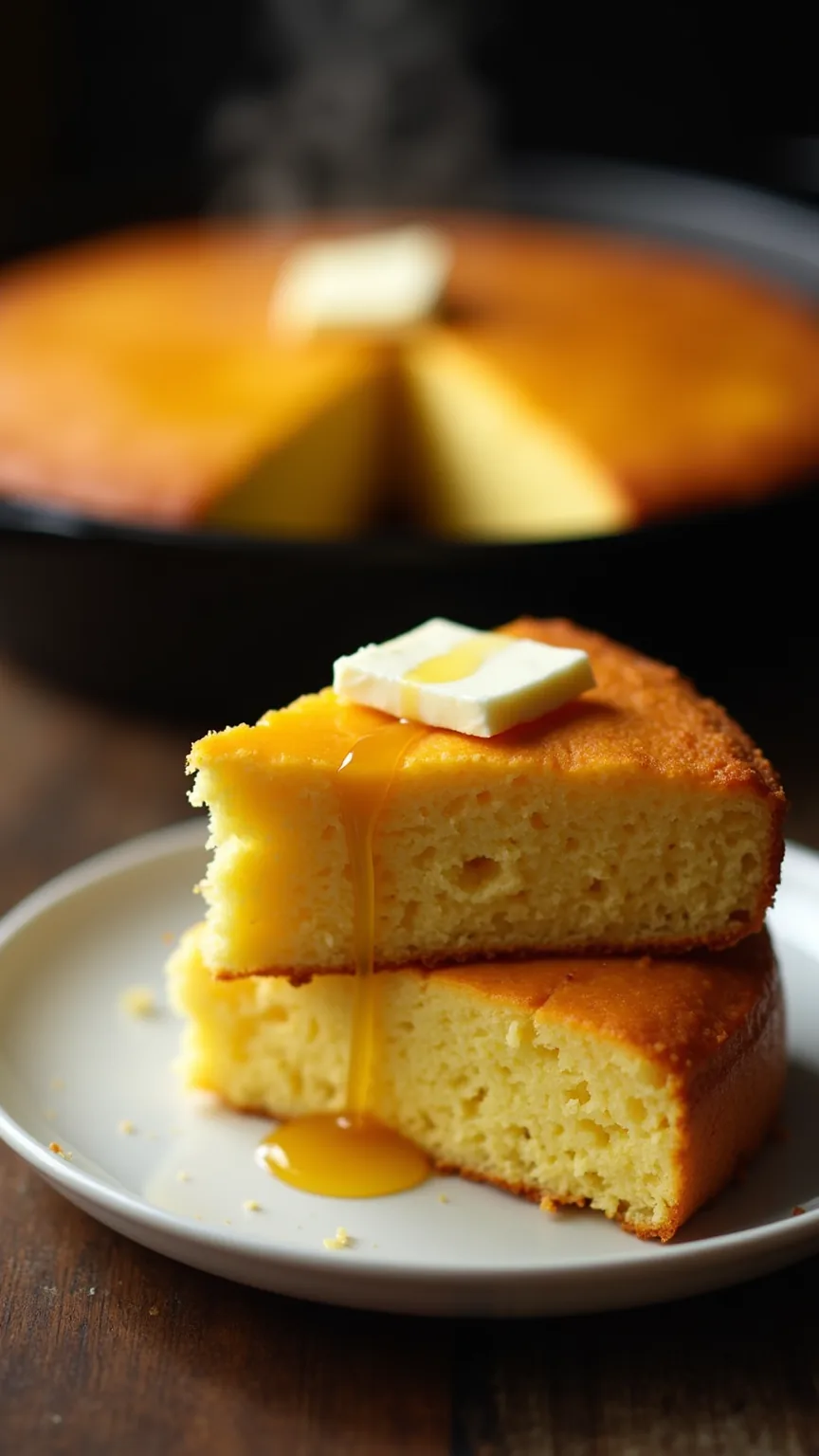
- Rest and serve. Let the cornbread cool in the skillet for 5 minutes, then cut it into 8 wedges right in the pan, or run a knife around the edge and turn it out onto a rack. Serve warm with butter and a drizzle of honey.
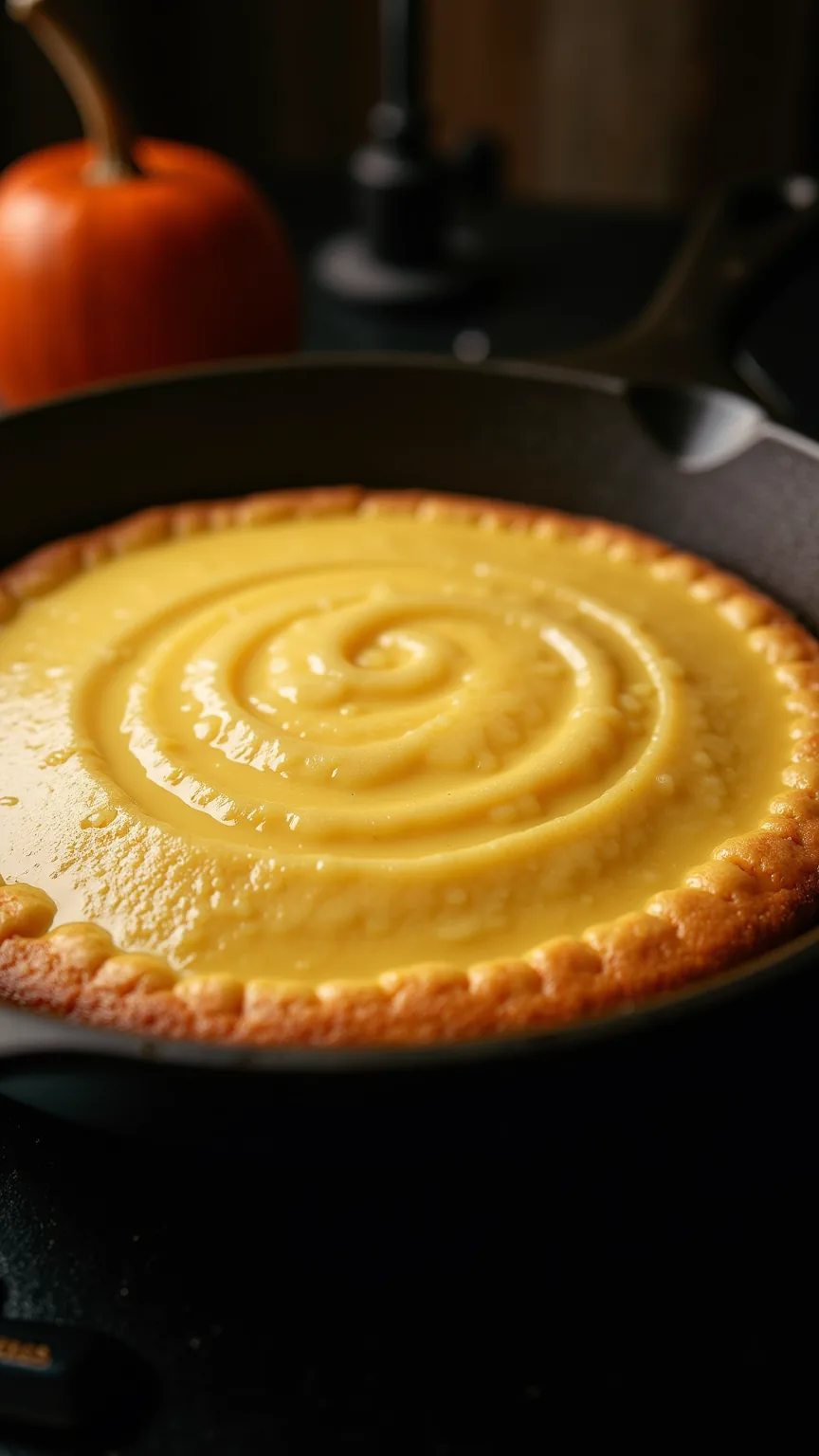
Cornbread for Thanksgiving stuffing
Skillet cornbread is the classic base for Southern cornbread dressing, and it’s better when you make it a day or two ahead, because slightly stale cornbread soaks up broth without turning to mush.
- Leave out the sugar for a savory dressing.
- Bake it 1 to 2 days ahead. Cool it completely, then crumble it into roughly 1-inch (2.5 cm) pieces onto a sheet pan. One 10-inch skillet gives you about 8 cups of crumbs.
- Let it dry. Leave the crumbs uncovered on the counter overnight, or dry them in a 300°F (150°C) oven for 20 to 30 minutes, stirring once, until they feel dry on the outside.
- Store them in a zip-top bag at room temperature for up to 2 days, or freeze for up to 1 month.
Our Cajun andouille sausage stuffing and make-ahead sausage and herb stuffing are both good places to put it to work. Swap the cornbread in for half of the bread for a Southern-style dressing.
Tips for the best skillet cornbread
- Preheat the pan, not just the oven. Batter poured into a cold skillet bakes up pale and soft at the edges. Batter poured into a hot one fries a little, and that’s where the crust comes from.
- Use real buttermilk. It makes the cornbread tender and tangy, and its acid works with the baking soda for lift. In a pinch, stir 2 tablespoons (30 ml) of lemon juice or white vinegar into enough whole milk to make 2 cups (480 ml) and let it sit for 5 minutes.
- Room-temperature buttermilk and eggs keep the melted butter from seizing into little clumps.
- Stir gently and briefly. Mix just until combined. Overmixing gives you a dense, tough crumb.
- Pick your cornmeal grind. Fine or medium grind gives a softer crumb. Stone-ground medium gives a more rustic, corny texture. Coarse grits-style meal stays gritty, so save it for something else.
- Watch the butter in the skillet. It should foam, not turn dark brown. If it starts to smell nutty and dark, pour the batter in right away.
Variations
- Jalapeño-cheddar: Fold 1 cup (113 g) shredded sharp cheddar and 1 to 2 seeded, minced jalapeños into the batter.
- Corn kernel: Fold in 1 cup (150 g) of thawed frozen or fresh corn kernels for sweet bursts.
- Honey butter: Beat 4 tablespoons (57 g) soft butter with 1 to 2 tablespoons (21 to 42 g) honey and a pinch of salt for serving.
- Sweeter, Northern-style: Increase the sugar to ¼ cup (50 g). It’s still good cornbread, just a different family’s cornbread.
Scaling it for your crowd
One skillet gives 8 wedges, enough for 8 people as a side alongside everything else on the Thanksgiving table. For a bigger crowd or for both serving and stuffing, make two skillets, or double the recipe in a 12-inch skillet plus a 9-inch skillet, adding a few minutes for the thicker one. If you’d rather not do the math, Keep the Sauce scales a recipe to any number of servings in grams or cups.
Storing and reheating
- Room temperature: Wrapped well, cornbread keeps for 2 days.
- Fridge: Up to 5 days, wrapped.
- Freezer: Wrap wedges individually and freeze for up to 3 months.
- Reheating: Warm wedges in a 350°F (175°C) oven for 8 to 10 minutes, or split them and toast them cut side down in a buttered skillet over medium heat until crisp.
Save it for next year
Cornbread is one of those recipes that lives in somebody’s head: a little of this, a hot pan, you’ll know when it’s right. That’s exactly the kind of recipe we built Keep the Sauce to hold onto. We made it for our own family, and we use it every day to keep recipes like this one together: scaled to the servings you need, in grams or cups, and shared with the people you cook with. We’re opening it up so families like ours can try it before they buy: it’s free to download on iPhone, iPad and Android and holds up to 10 recipes. If it earns its spot in your kitchen, Own it is a one-time $4.99 in-app purchase for unlimited recipes on every platform. Learn more at keepthesauce.com.
More for the Thanksgiving table: make-ahead turkey gravy, make-ahead mashed potatoes, Southern baked mac and cheese, crispy Brussels sprouts with bacon and our Thanksgiving one-oven timeline.
FAQ
Why do you heat the skillet before adding the batter? A preheated cast-iron skillet starts cooking the outside of the batter the instant it goes in. That sizzle sets a crisp, golden crust on the bottom and edges that you can’t get from a cold pan.
Can I make cornbread without a cast-iron skillet? Yes. Use a 9-inch square metal pan or a 9-inch cake pan, heat it in the oven with a little butter just like the skillet, and bake for 20 to 25 minutes. The edges won’t be quite as crisp.
Should Southern cornbread have sugar? Families argue about this every year. Traditional Southern cornbread has little or no sugar. We use one tablespoon, which you’ll barely notice, and we leave it out when the cornbread is going into stuffing.
Can I make cornbread ahead for Thanksgiving? Yes. For serving, bake it the morning of and rewarm wedges at 350°F (175°C) for 8 to 10 minutes. For stuffing, bake it 1 to 2 days ahead and let the crumbs dry out.
Why is my cornbread dry or crumbly? Usually it’s overbaked, or the recipe has too little fat or liquid. Start checking at 20 minutes and pull it as soon as a toothpick comes out clean. A little flour, as in this recipe, also helps it hold together.
Can I use regular milk instead of buttermilk? Make a quick substitute with lemon juice or vinegar (see the tips above). Plain milk works in a pinch, but the cornbread will be less tender and tangy, and you should skip the baking soda and use 1 tablespoon of baking powder total.
How do I know when cornbread is done? The top is deep golden, the edges pull away from the pan, a toothpick in the center comes out clean and the center reads about 200°F (93°C).